History 10 Lesson Plan

Date: March 15 2020

Subject: History 10

Author: Emma Friedt

Grade Level: 12

Time Duration: 4-5 hours (4-5 periods)

Overview of Lesson: Examining political ideologies (conservatism, liberalism, and socialism) and understanding their role in the political process.

Professional Growth Guide Goal(s):  

Knowledge Objectives:

– Understanding the political ideologies as key concept of Canadian politics which runs into their own understanding of their roles in the political process (continuing into the next lessons).

Outcomes: Students understand the differences between each political ideology, students understand what constitutes a political ideology.

Indicators: Students presentations are well informed with solid examples and demonstrate a key understanding of materials covered in the lesson.

Materials: Computer, paper with information and room to write on, writing utensils.

Activities and Procedures:

  • Overview/Agenda/Review/Introduction:
  • Begin with a presentation of the ideologies:
  • Explaining what political ideologies are
  • The three types in Canada with examples
  • Explain the political process (insert a video)
  • Give the students their presentation assignment where each student (in groups or by themselves) will explain what political ideologies are and present on a specific political ideology with Canadian examples.
  • Demonstrating their understanding of the lesson of political ideologies in Canada.
  • Subject Content and Teaching Strategies:
  • Political ideologies in Canada
  • The political process
  • Visual – slides
  • Auditory – explaining and drawing out where each political ideology stands
  • Kinesthetic – students can write what they know on the board as well as make their own presentations.

Assessment:

Formative assessment with feedback of the presentations, oral presentation,

Summative assessment of the presentation viewing their understanding of political ideologies.

French Lesson Plan

Date: March 15 2020

Subject: French Immersion 30

Author: Emma Friedt

Grade Level: 12

Time Duration: 2-3 hours (1-2 periods)

Overview of Lesson: Writing a letter in French about a given topic to another student in the class to demonstrate formal writing skills in French.

Professional Growth Guide Goal(s):

30PÉ.1: Read, and consider the subject, ideas and elements characteristic of, various current and literary texts of French origin.

30CÉ.1: Write various current and literary texts.

30PO.1: Use oral vocabulary, sentence structures and idiomatic, technical and proverbial expressions, suitable for various formal and informal situations.

Outcomes:

  • Ameliorating French grammar in writing, as well as the understanding of grammar rules in formal writing.
  • Developing students writing skills in French, such as formal letter writing.
  • Comprehension of French writing, improving student’s vocabulary, understanding French terms and use of French verb tenses.

Indicators:

– The letter exhibits a good understanding of French grammar rules.

– A well written letter that makes sense to both students and teacher.

Cross Curricular Competencies: Can tie into English (similar concepts but in French and can explain this to gain more understanding).

Activities and Procedures:

  • Overview/Agenda/Review/Introduction:
  • Begin with a slide that gives examples of writing:
  • A good example and bad example and ask students what the differences in these may be
  • Using this as a way to introduce the letter writing assignment
  • Explain the steps of the assignment and provide students with topics to ramp up their motivation
  • Such as “What did you do this weekend?”, “What is something you’re looking forward to?”, “What is something you find interesting?”
  • Subject Content and Teaching Strategies:
  • Reading, writing in French
  • French grammar
  • Visual strategies – slides
  • Kinesthetic strategies – writing
  • Auditory – reading together and out loud/explaining

Assessment: There will be formative assessment from peers who have received the letter, noting the understanding of the vocabulary and judgements of the grammar rules. There will be formative feedback from the teacher, then students are able to rewrite their letters for their final summative assessment.

An Exploration of Assessment For, Of, and As Learning

In exploring assessment, for, of and as learning, we must understand what each of these assessment methods means. Assessment of is summative evaluation which determines the mark or grade achieved. Assessment for is a type of formative assessment, which can comes from external sources, so not only from the teachers but also from peers. This assessment helps students improve their understanding and how to better take on the course. Assessment as is another type of formative assessment but it comes from an internal source and causes self reflection.

I can remember in high school when we would take quizzes that didn’t count that were used as Assessment Of learning, in order to gage how well students were learning and what the teacher needed to do in order to improve their understanding and change how they were approaching the lessons. Assessment For learning was used more often as motivation for the student to do better and involved more interaction between student and teacher, giving lots of feedback to strengthen a student’s work. Finally, Assessment As learning was the self reflection questions we were given once finishing a project or an evaluation and reflecting on how we felt that we had done, what we had struggled with, etc. A way to understand how to assess our own learning and becoming self-involved with how we were doing. It is another great way to improve motivation for students.

I know that these assessment methods are quite beneficial to students but it is important to understand how students identify themselves to their grades, and in doing these assessments to make sure they are aware that their worth is not related to their grades. Grades and improvement are something to take pride in, but they should not be something that should destroy student’s self-esteem. Working with students not only to improve their understanding of the course but also how they have been feeling about it is very important. Bad grades can lead to low self-esteem and a lack of motivation, something that can be stopped when teachers and students work together.

I believe that all of these can be used in a variety of ways. For instance, they could all be combined. An example of this could be a project based on the unit that students had learned and this project could be an assessment of learning. In order for their project to be approved they must make up a plan to show to the teacher. Together the student and the teacher worked together to improve the plan and to motivate the student to make it even better. After finishing the project and receiving their grades the students are given self-reflections of their projects, these are assessment as learning. The students are able to assess how they did on the project, what areas they might have improved, what they might have changed, etc. They are able to assess their own learning and in this are able to learn more about themselves and the course.

As mentioned before, it is important to have built a relationship with your students and to make sure that they are comfortable with the assessment you are doing. We do not want assessment to lead to anything negative when is supposed to be beneficial and motivating to the students. These should not always be used together but can be spread out throughout the semester. It is interesting however how you can combine all three when it comes to projects. Assessment is not only important for the students but for how teachers can acknowledge how well they are doing and what they can improve themselves in their classrooms.

Comparison of Saskatchewan and Albertan Curriculum

I decided to explore the differences between Saskatchewan curriculum and the Alberta curriculum. In particular, I looked at the differences between Saskatchewan’s History 10 curriculum guide and Alberta’s Social Studies. As we begin, we know that Saskatchewan’s curriculum guide for history has not been updated for many years, twenty-eight in fact. I will further explore the two curriculums, one at a time, before finishing with what curriculum I prefer.

The Saskatchewan curriculum is, as mentioned, quite outdated. Despite this, the curriculum contains an overview of the curricula, including teaching skills and abilities developed towards this curriculum, controversial issues, evaluation, unit and lesson plans to name a few. The layout is easy to navigate which is good since the curriculum is almost three-hundred pages. The curriculum describes the ability to teach students the curriculum in a way that leads to them achieving the objectives of higher order thinking. There are knowledge objectives, skills & abilities objectives and value objectives. There are five main concepts of the course which include: interdependence, social institution, decision-making, power, and ideology. There are actually a lot of resources included, such as adaptions to assessment and evaluations, unit and lesson plans and other resources that might be a bit outdated but probably still useful.

The way that social studies has been divvied up in Alberta is slightly confusing to me. It is interesting to see how it works in another province, especially since the order of it goes Social Studies 10-1, Social Studies 10-2 and Social Studies 10-4. It is obvious that each of these courses is provided with many outcomes that relate to critical thinking and understanding of the world around us. Gives examples of varying ways to assess students and an emphasis on differentiated learning, just as the old Saskatchewan curriculum attempts as well. Not only does the Alberta curriculum provide resources for teachers (digital and print sources) but it also provides resources for students and their parents in order to achieve and understand the outcomes from home. Something that will work great in times such as these.

After looking over the two curriculums, I decided that I enjoyed Saskatchewan’s curriculum the best. The reason for this being the familiarity of the curriculum, along with a better understanding of how courses in Saskatchewan work. While the history and social studies curriculum needs updating in this province there are definitely many resources that you can find in order to update the curriculum to twenty-first century standards.

Differentiated Instruction for Secondary School Learners

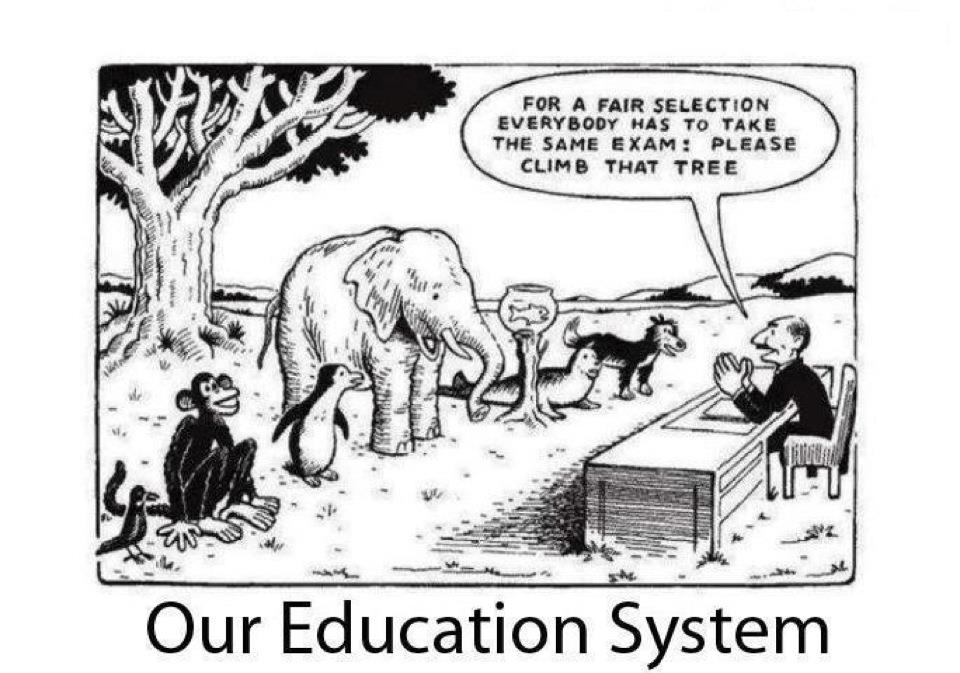
Differentiated learning is critical to each classroom. Students can have one or multiple learning styles that are very effective to their comprehension of class outcomes and material. As education has improved so has the understanding of how students learn. They definitely do not all learn the same way, which is not to say that they cannot be taught different ways of critical thinking and strengthening the use of other learning styles. It is still important to incorporate differentiated instruction in the classroom, especially for secondary school learners.

Secondary school learners can skip out if they want to. It is in developing a relationship with students and providing them with ample ways to learn that they are encouraged to learn. Developing different ways to do assignments can be a big step to connecting with students interests outside the classroom (such as computers, photography, writing, etc.) Understanding different methods of teaching is critical to ensuring that students remain interested in the class and enthusiastic in their learning. Not to say that everything is on the teacher to make the student learn, rather it is improving the conditions of learning that motivates the students to want to learn and to feel that they have the support to do so.

Being able to support students with cognitive disabilities, immigrant students or reactive kids are all examples of ways in which learning must be differentiated for students. It can also be as simple as a student who learns better visually than kinaesthetically. Time and effort must be put in to differentiated learning in secondary classrooms. This can often come to personal sacrifices for teachers, but in the end it relates to the improvement of their students learning and the meeting of their different needs. It is focusing on the unique needs of individual students rather than them as whole, but this does not mean separating students and isolating them from each other. Rather it relates to the time, effort and recognition that each student is on their own unique journey of learning.

Comparative Analysis of Three Instructional Methods

For my comparative analysis, I chose to reflect on these three instructional strategies that I would someday enjoy using in the classroom.

The first teaching method is Jigsaw. This activity is a great way to learn information while also speaking to different classmates. The students begin in groups, each individual group learns something different. After discussion what they’ve learned new groups then form so that each group is represented in this new group. Each member must relay the information they learned from their “expert” group back to the “home” group. This gives the students a role in their learning that they might be excited or proud to share to their group.

The second teaching method is Peer Teaching. This method is used often in classrooms. When learning something new the teacher might tell you to turn to a classmate or a few in order to discuss what is happening and to build off of each other’s understanding. This can be beneficial to explore the ways that other students learn and understand concepts that can be implemented into other students learning as well.

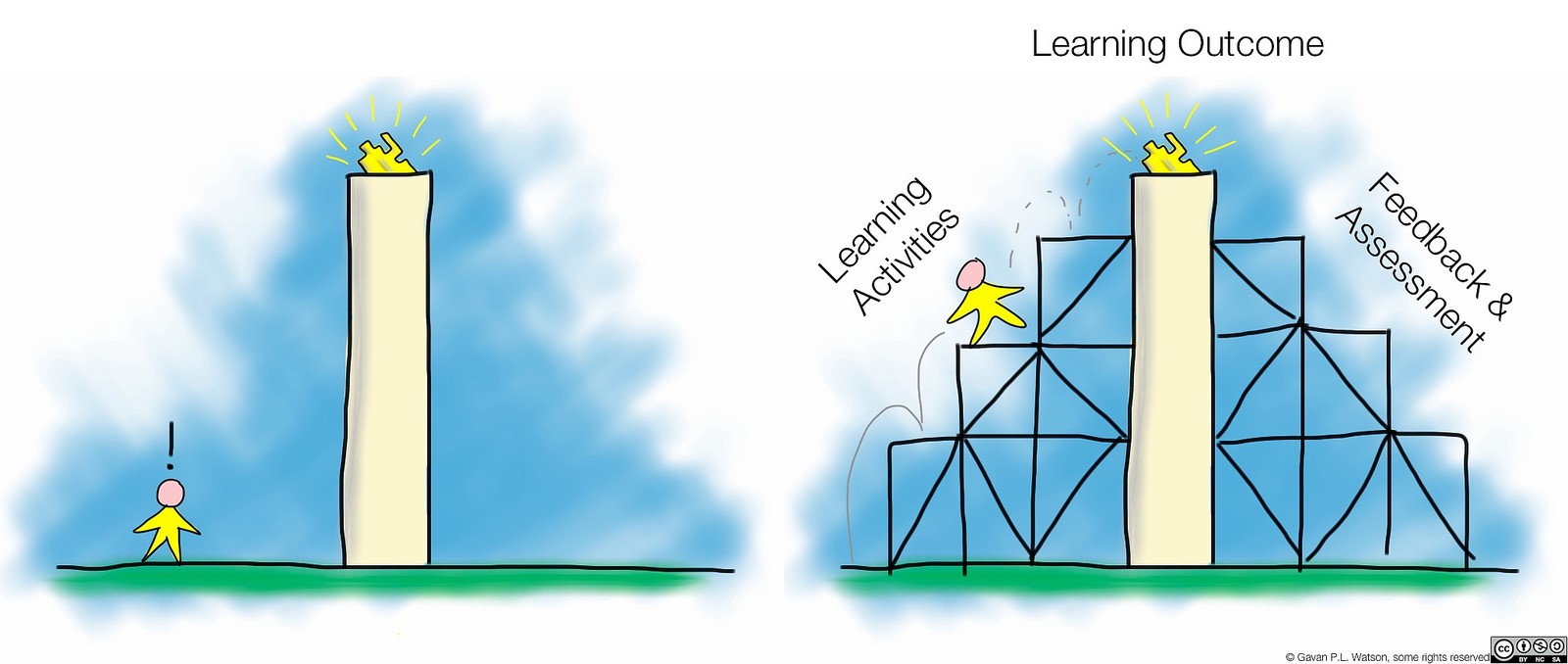
The third teaching method I am discussing is Scaffolding. Scaffolding is an approach that involves a building upon knowledge in order to help students grasp concepts within their reach, that they might need a push to get to. An example of this could be a teacher facilitating a conversation about Hamlet. The students may be understanding the themes of the play but not understanding the outcome. The teacher can lead a discussion providing specific examples and asking questions that can help students build to their own comprehension of the play’s outcome.

Reflection: My Personal Learning Style

The results and information I found out about my learning styles from the VARK and MBTI tests were quite similar. I learned from the VARK questionnaire that I am a very visual and hands-on learner. Seeing people build something or work out a math problem is often very helpful. For my MBTI test I got ENFJ/INFJ, there was little to no difference between me being extroverted and introverted. The results mentioned a lot about being able to balance work and personal life, which I think I am also good at doing. Mainly I focused in on the sections that talked about how ENFJ learn from other people. Similar to the VARK questionnaire, it related to the visual and auditory ways that I learn. Even better it mentions how I learn by repeating or telling other people, which is very spot on for me. I love to explain things to other people and it helps me to better understand information and memorize it.

I think my teaching might be affected when it comes to relating to the different learning needs in the classroom when I learn a certain way. That is why I think it’s important, not only for myself but for all teachers to learn to teach in various different ways. That way when you are teaching a student who learns differently from yourself, you’re able to work with their needs. Not to say you shouldn’t try to challenge students by pushing them to learn in different ways, but accommodating to differentiated learning styles in the classroom is incredibly important and I should be mindful. I cannot be focused on only teaching visual and auditory learning styles when there are numerous styles. That is a challenge to being a better teacher for all of your students.

In taking the TPI test, I noticed that my highest two teaching perspectives are Developmental and Nurturing. Followed by Transmission, Apprenticeship and lastly Social Reform. I am glad that developmental and nurturing are my highest two perspectives (40 points in each), I am also glad that the other perspectives had high scores as well and were close (37, 37, 32). I have always been interested in helping other people do better and find out what works best for them. I think this can relate to both my VARK and MBTI results because I am a hands-on person that likes to communicate with people and help people, even before myself. I have prioritized development and nurturing because those are beneficial foundations that need to be strong for students to continue developing and improving. Everything is connected in a way, which I find is very interesting. It takes getting to know yourself and how you learn to help you understand to how you can be more effective.

See the source image

My Initial Teaching Philosophy

My philosophy towards teaching has been building since I decided to go into education. A large part of it was seeing how I had been taught and wanting to ameliorate that for my own students. I know that I could not understand how hard some thing are to deal with until I am in the position to deal with them myself. Yet, there were many reasons, such as differentiated learning, that was unavailable during the time I went to school. Resources were a lot better in high school but definitely not where they could be. Something I want and need to focus on as a teacher candidate is the many ways I need to learn to accommodate my students needs and to make myself able to respond to those needs.

My beliefs towards how students should live in my subject area is slightly different in both. For social studies, I am hoping students are able to develop a lot of critical thinking and learn to avoid presentism. Not only do I want students to learn about Canada’s past, but I’d like them to experience it as well. This could come in the form of a class trip to Batoche or a trip to the Canadian Forces Base in Moose Jaw. These trips can be very stimulating and impressionable to students, both offer different perspectives of Canadian history as well. In my French classes, I would also love to give them experiences, such as a trip to a French play or a festival. In the classroom I would really like for my students to build upon the foundations they’ve constructed by exploring the main areas of speech, writing and reading. The curriculums for many French classes, including French social studies, have finally been updated after years. This is very exciting to me and I cannot wait to make these classes interesting for my students and appealing to all different ways of learning.            

Classroom management and assessment have been areas I’ve worried a bit about. As a smaller person, I’m not often taken very seriously. By building relationships and respect with my students I hope to overcome this. I think a connection with my students is very important, not only for them to take me seriously but to take the class seriously. I know that these relationships are not easy to build and will be unique to each of my students, but I am willing to put the effort into them. Assessment has always bothered me for several reasons. It often puts pressure on students which can lead to anxiety, bad self-image, good grades = good self-worth, etc. It does not properly reflect how much your students know and have learned in the classroom. That is why, along with differentiated learning in the classroom. I am hoping to bring in different ways to assess students that does not always conform to taking a written test. Memorizing information is a lot different than understanding information. I hope that differentiated learning and assessment in the classroom can help the students to realize that.

See the source image

Reflection: First year of teacher education.

My first year in university as an education student is coming to a close. While the past couple weeks have been nothing like I would expect (i.e. major car accident, COVID-19), it was still another great term filled with learning. In some ways I’ve felt like I’m becoming a teacher but it has felt like I’m being prepared to get to the point of becoming a teacher. I’ve taken three education classes this year and in the first two years there’s only four. I think these classes have helped me to feel more prepared for what I will be studying and to help build the foundations of my professionalism and philosophies.

I have enjoyed my education classes but the fact that two of them have been in the evening have given me some anxiety about walking home at night, but it went okay. I had never really been to Saskatoon before I moved for university so it was a bit scary. I think that the classes I’ve had at the College of Education have aided me greatly in accommodating to the new school community that I am a part of. Building those connections seems like a really important step because it helps to bring you some confidence in where you are and to build relationships with others. I know that I’ve made a surprising amount of friends this year at university, and a lot of them have been other education students. Everyone has to take similar classes so there’s usually a face or two that you can recognize in any class you’re in.

Teaching is definitely something that I still want to do. At some points it feels very overwhelming to be responsible for multiple students and classes, but not so tough when you’re a secondary teacher. I’ve always loved to teach people about history and French has been a helpful tool to have so I am excited to see what my teaching career would be like. Ultimately I would love to teach Canadian and world history in French, even though I might end up teaching other classes I might not be too fond of. Ah math. Just accepting that everything might not be how I imagine it to be has been a step in itself. While I am learning in to teach in the classroom right now, it will be completely different than actually teaching a class.

Personally, I don’t think I’ve changed my mind too much about anything. For a period, I was struggling to enjoy the French classes I was taking, which pushed me to consider changing my minor. Ultimately, I decided against that. Having a major or minor in French is very beneficial, it’s just been the type of French classes that I haven’t liked. I just have to pick better fitting classes for next fall. I’ve been planning out the next three years of university and I’ve been really excited for what each year will hold and what I will learn. Similar to the Intro to Education class, this year has felt like an introduction to university and the College of Education. Altogether it’s been a great learning experience, which I’m excited to keep building on.

See the source image

Letter to my Grade 8 self

Dear past Emma,

Going into grade nine isn’t anything you should worry about. You’ll make the switch just fine, you’re smart and you’re motivated and you’re going to be very successful. Where you are now is nothing compared to where you’ll be in the next few years. Everything hard is going to clear up and it’s nothing you’re going to have to deal with soon. Sticking around the friends you’ve had and who’ve been there for you is exactly what you need to do and you’re going to meet one of the best friends ever. You should join soccer earlier; it’s going to be one of the best things you try and you’ll regret not trying it sooner. Along with that, try out for drama sooner, don’t be embarrassed by anything. Joining choir and chamber choir is going to be incredibly beneficial towards your social anxiety and bringing up your confidence. School spirit is so fun and nothing to be embarrassed about, in fact it makes the moments better and more memorable.

Spend more time with your dogs, you’re going to miss it if you don’t. They love you. You’re really going to love your grade twelve Catholic Studies teacher and he’s going to help you to realize that teaching is the future for you and something you think you will excel at. Enjoy every moment with your friends and your family, because sometimes you’re not going to be able to see everyone every day. You’re going to miss those moments when the four strangers in a lecture auditorium were the 20 people you grew up with in the Frenchies classroom (don’t let that number of people freak you out, it’s fine, it’s just not like home). I know that you’ve been scared for a long time about growing up. Even though it is scary at times, it has the best moments. Enjoy high school for what it is — another great learning experience in life. Just know that at the end of the day, life will get figured out even in the most unexpected ways. Have fun in school and be relieved to know that you finally knew what you wanted to do in university, and it’s great.

Love,

Future Emma

Design a site like this with WordPress.com
Get started